
Pelvic Organ Prolapse
Pelvic organ prolapse occurs when normal vaginal support is lost, causing the bladder, urethra, cervix, rectum, vagina, or uterus to sag or drop.
Request an AppointmentRequest a Consultation
Recognize the Signs of Prolapse
Bulging, pressure, or heaviness in the vagina
Difficulty urinating, weak or spraying urine stream, urinary frequency, or incomplete bladder emptying
Bowel movement difficulty, pelvic pressure, or the feeling of “sitting on a ball”
What Is Pelvic Organ Prolapse?
Pelvic organ prolapse is a medical condition that occurs when the normal support of the vagina is lost. This can result in sagging or dropping of the bladder, urethra, cervix, and rectum. As prolapse of the vagina and uterus progresses, women may feel bulging tissue protruding through the opening of the vagina.
Some loss of support is a very common finding on physical exam, and many women do not have bothersome symptoms. Those who are uncomfortable often describe the first signs as subtle, such as an inability to keep a tampon inside the vagina, dampness in underwear, or discomfort due to dryness during intercourse.
As prolapse gets worse, symptoms may include a bulging, pressure, or heavy sensation in the vagina that worsens by the end of the day or during bowel movements; the feeling of “sitting on a ball”; needing to push stool out of the rectum by placing fingers into the vagina during bowel movements; difficulty starting urination; a weak or spraying stream of urine; urinary frequency; the sensation of not emptying the bladder well; needing to lift the bulging vagina or uterus to start urination; or urine leakage with intercourse.
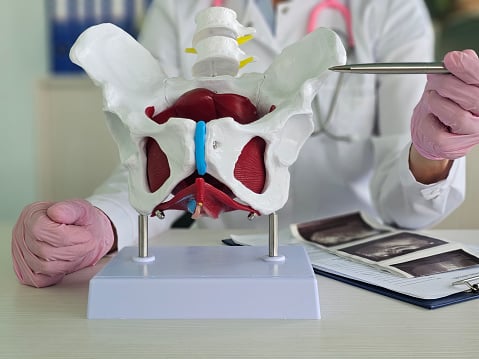
Causes, Risk Factors, and Types of Prolapse
Researchers and urogynecologists have identified certain risk factors that may predispose, cause, promote, or worsen pelvic organ prolapse. The strength of bones, muscles, and connective tissue is influenced by genes and race. Some women are born with weaker tissues and are therefore at risk of developing prolapse. Caucasian women are more likely than African American women to develop pelvic organ prolapse.
Loss of pelvic support can occur when any part of the pelvic floor is injured during vaginal delivery, surgery, pelvic radiation, or back and pelvic fractures from falls or motor vehicle accidents. Hysterectomy and other procedures performed to treat pelvic organ prolapse are also associated with future development of prolapse. Other conditions that may promote prolapse include constipation and chronic straining, smoking, chronic coughing, and heavy lifting. Obesity, like smoking, is one of the few modifiable risk factors; women who are obese have a 40% to 75% increased risk of pelvic organ prolapse. Aging, menopause, and debilitating nerve and muscle diseases can also contribute to deterioration of pelvic floor strength and development of prolapse.
Types of pelvic organ prolapse include anterior vaginal prolapse, posterior vaginal prolapse, uterine prolapse, and vaginal prolapse after hysterectomy. Posterior vaginal prolapse, also known as rectocele, occurs when weakening and stretching of the back wall of the vagina allows the rectum to bulge into and out of the vagina. Uterine prolapse occurs when the supporting ligaments and muscles of the pelvic floor that keep the uterus in the pelvis are damaged, allowing the cervix and uterus to descend into and eventually out of the vagina. Vaginal prolapse after hysterectomy can occur when the top of the vagina becomes detached from its supporting ligaments and the tube of the vagina turns inside out.
Treatment details vary by type and severity. The source page notes that some women may benefit from pelvic floor muscle strengthening and vaginal pessaries, while surgery may be considered when lower-risk interventions are insufficient or when support is otherwise recommended.
Frequently Asked Questions
What is pelvic organ prolapse?
Pelvic organ prolapse occurs when normal support of the vagina is lost, leading to sagging or dropping of pelvic organs such as the bladder, urethra, cervix, rectum, vagina, or uterus.
What symptoms can pelvic organ prolapse cause?
Symptoms may include vaginal bulging, pressure, heaviness, the feeling of “sitting on a ball,” difficulty with bowel movements, difficulty starting urination, weak or spraying urine stream, urinary frequency, incomplete bladder emptying, or urine leakage with intercourse.
What can increase the risk of pelvic organ prolapse?
Risk factors may include weaker connective tissues, vaginal delivery, surgery, pelvic radiation, back or pelvic fractures, hysterectomy, constipation and chronic straining, smoking, chronic coughing, heavy lifting, obesity, aging, menopause, and certain nerve or muscle diseases.
What are the types of pelvic organ prolapse?
Types listed on the source page include anterior vaginal prolapse, posterior vaginal prolapse, uterine prolapse, and vaginal prolapse after hysterectomy.
Are there non-surgical options for pelvic organ prolapse?
The source page notes that some women may find benefit from pelvic floor muscle strengthening and vaginal pessaries. It also notes that surgery may be performed or recommended in certain cases.
Still Have Questions?
Talk with us about your symptoms
Our team in Sparta and Wayne, New Jersey can help you understand your options and build a care plan that fits your goals.