
Endometrial Ablation
Endometrial ablation is a procedure that destroys the uterine lining, or endometrium, and is used to treat dysfunctional or abnormal uterine bleeding.
Call (973) 512-3222 to Make an AppointmentRequest a Consultation
When Bleeding Requires Additional Treatment
Heavy, prolonged vaginal bleeding
Bleeding that has not responded to other treatments
Need for an option when childbearing is completed or hysterectomy is not preferred or not recommended
What Is Endometrial Ablation?
Endometrial ablation is a procedure that destroys, or ablates, the uterine lining, called the endometrium. This procedure is used to treat dysfunctional or abnormal uterine bleeding. Sometimes a lighted viewing instrument, called a hysteroscope, is used to see inside the uterus.
Endometrial ablation may be done using a laser beam, heat, electricity, freezing, or microwave. The endometrium heals by scarring, which usually reduces or prevents uterine bleeding.
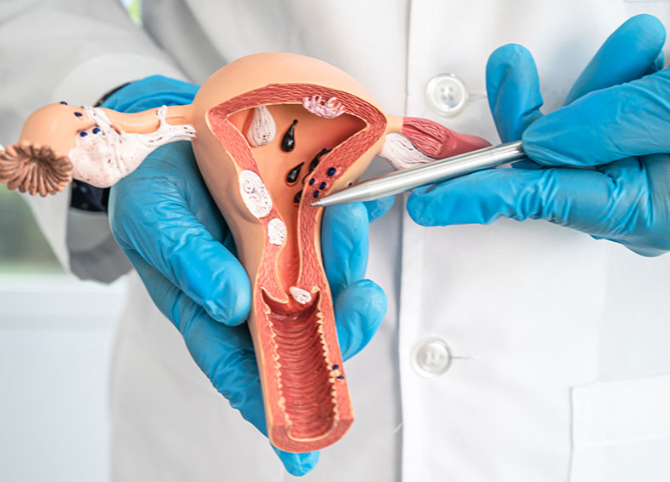
Why It Is Done and What to Expect
Endometrial ablation is used to control heavy, prolonged vaginal bleeding when bleeding has not responded to other treatments, childbearing is completed, a patient prefers not to have a hysterectomy to control bleeding, or other medical problems prevent a hysterectomy.
After the procedure, some side effects may occur, such as cramping, nausea, and vaginal discharge that may be watery and mixed with blood. This discharge usually becomes clear after a couple of days and can last around 1 to 2 weeks. Recovery can take a few days to 2 weeks, and patients can usually go home the same day.
Frequently Asked Questions
What is endometrial ablation?
Endometrial ablation is a procedure that destroys the uterine lining, or endometrium, to treat dysfunctional or abnormal uterine bleeding.
Why is endometrial ablation done?
It is used to control heavy, prolonged vaginal bleeding when bleeding has not responded to other treatments, childbearing is completed, hysterectomy is not preferred, or other medical problems prevent hysterectomy.
What can happen after endometrial ablation?
Side effects may include cramping, nausea, and watery vaginal discharge mixed with blood that becomes clear after a couple of days and can last 1 to 2 weeks.
How long is recovery after endometrial ablation?
Recovery may take a few days to 2 weeks, and patients can usually go home the same day.
Still Have Questions?
What Clients Say
Relief Is Possible. Let’s Find Your Path to It.
Call Advanced Women’s Health of NJ to schedule a private consultation with Dr. Paul Littman. You don’t have to keep managing this on your own.