I often care for women who are experiencing pelvic floor disorders, fibroids, endometriosis, prolapse, or other conditions that may eventually require surgical treatment. When surgery becomes part of the conversation, one of the most common questions I hear is:
“What kind of surgery will I need, and what will recovery be like?”
That is an important question. My goal is always to recommend the least invasive, most effective approach for each patient’s condition, anatomy, and goals. For many women, robotic-assisted surgery using the da Vinci Surgical System offers an advanced minimally invasive option.
The da Vinci system does not replace the surgeon. Instead, it gives the surgeon enhanced visualization, precision, and control while performing complex procedures through small incisions.
What Is the da Vinci Surgical System?
The da Vinci Surgical System is a robotic-assisted surgical platform designed to help surgeons perform minimally invasive procedures with a high level of accuracy.
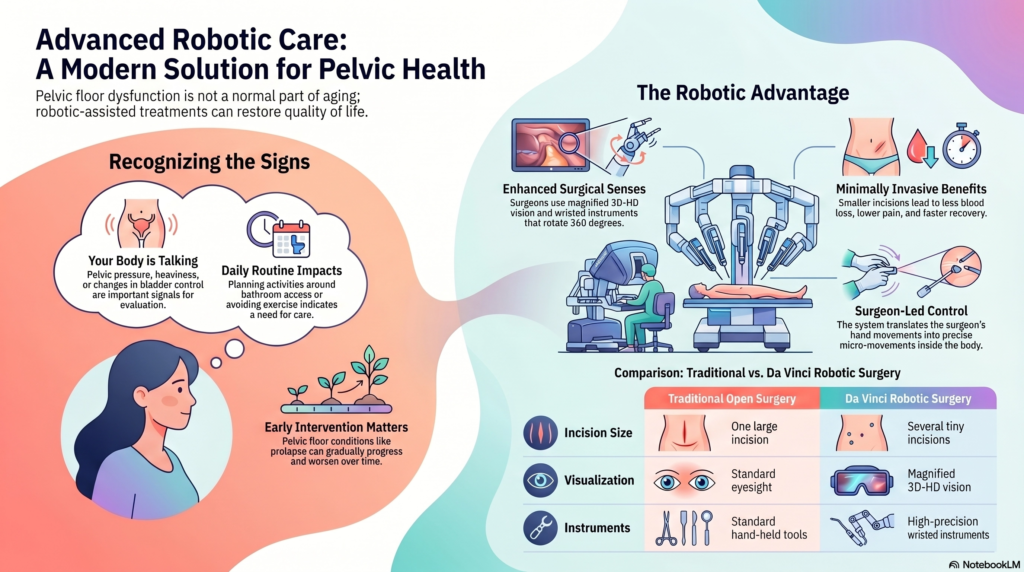
During surgery, I sit at a surgeon console near the patient and control specialized instruments. The system translates my hand movements into smaller, highly precise movements of tiny instruments inside the body. These instruments are placed through small incisions, along with a camera that provides a magnified, high-definition 3D view of the surgical area.
This combination of visualization and instrument control can be especially valuable in pelvic surgery, where delicate structures such as the bladder, uterus, bowel, blood vessels, nerves, and pelvic support tissues are located close together.
Robotic-Assisted Surgery Is Still Surgeon-Led Surgery
One misconception I like to clarify is that the robot is not performing the surgery independently. The da Vinci system is fully controlled by the surgeon at all times.
Every movement of the instruments is directed by the surgeon’s hands. The technology simply allows those movements to be translated with greater precision inside the body. It also provides a stable, magnified view that can help the surgeon work carefully in small or complex spaces.
In other words, robotic-assisted surgery combines advanced technology with the surgeon’s training, judgment, and experience.
Why Precision Matters in Pelvic Surgery
Pelvic surgery often involves operating in a confined space with important organs and support structures close together. Whether we are treating fibroids, endometriosis, prolapse, or other pelvic conditions, precision matters.
The da Vinci system allows for:
- Small incisions instead of one large open incision
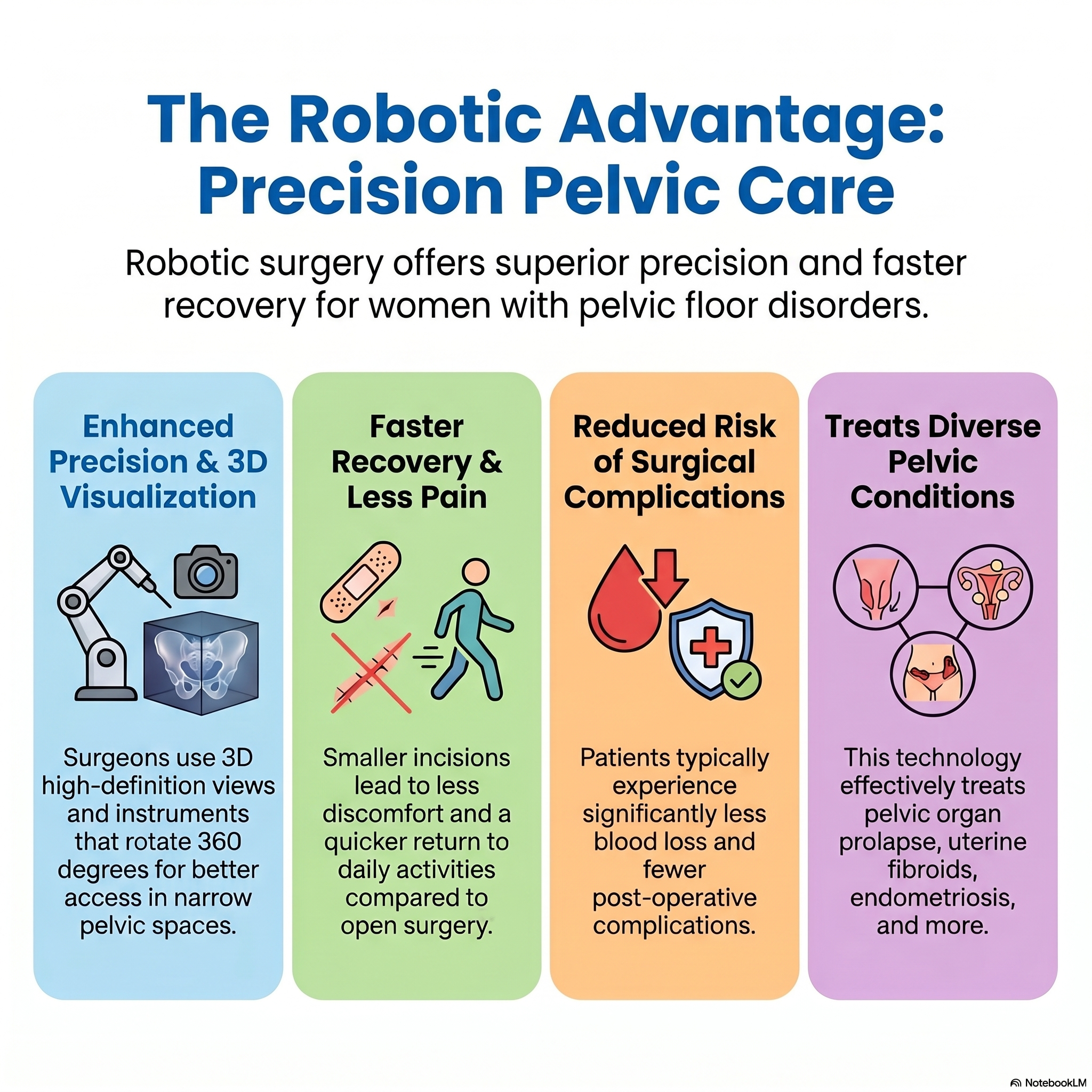
- Magnified 3D visualization of the anatomy
- Wristed instruments that can bend and rotate more than traditional laparoscopic tools
- Improved dexterity during delicate dissection and suturing
- Steady instrument control for complex surgical movements
For the patient, minimally invasive surgery may offer benefits such as less postoperative discomfort, smaller scars, less blood loss, and a faster return to daily activities compared to traditional open surgery. However, every patient is different, and the right surgical approach depends on the individual condition and overall health.
Conditions That May Be Treated With Robotic-Assisted Surgery
In urogynecology and minimally invasive gynecology, the da Vinci system may be used for several procedures, including:
- Robotic-assisted hysterectomy
- Robotic myomectomy for uterine fibroids
- Robotic endometriosis resection
- Robotic sacrocolpopexy for pelvic organ prolapse
- Other reconstructive pelvic procedures when appropriate
Not every patient needs surgery, and not every surgery requires robotic assistance. My role is to help patients understand their diagnosis, compare treatment options, and determine whether robotic-assisted surgery is the best fit for their situation.
What Patients Should Know Before Considering Surgery
Before recommending surgery, I begin with a complete evaluation. That includes discussing symptoms, medical history, previous treatments, imaging when needed, and the patient’s personal goals.
Some patients are focused on pain relief. Others want to preserve fertility, improve bladder function, correct prolapse, or return to daily activities with less disruption. These goals matter when choosing a treatment plan.
When robotic-assisted surgery is appropriate, I explain what the procedure involves, what recovery may look like, and what risks should be considered. No surgery is without risk, and patients deserve clear information before making a decision.
Technology With a Patient-Centered Purpose
The value of robotic-assisted surgery is not the technology alone. The value is what the technology can help us accomplish for the patient.
For me, the da Vinci system is a tool that supports careful, minimally invasive care. It allows me to treat certain complex pelvic conditions with enhanced precision while helping patients move toward recovery with a thoughtful, individualized plan.
If you have been told you may need pelvic surgery, or if you are living with symptoms such as pelvic pressure, heavy bleeding, endometriosis-related pain, or prolapse, I encourage you to seek an evaluation. Understanding your options is the first step toward choosing the treatment path that is right for you.