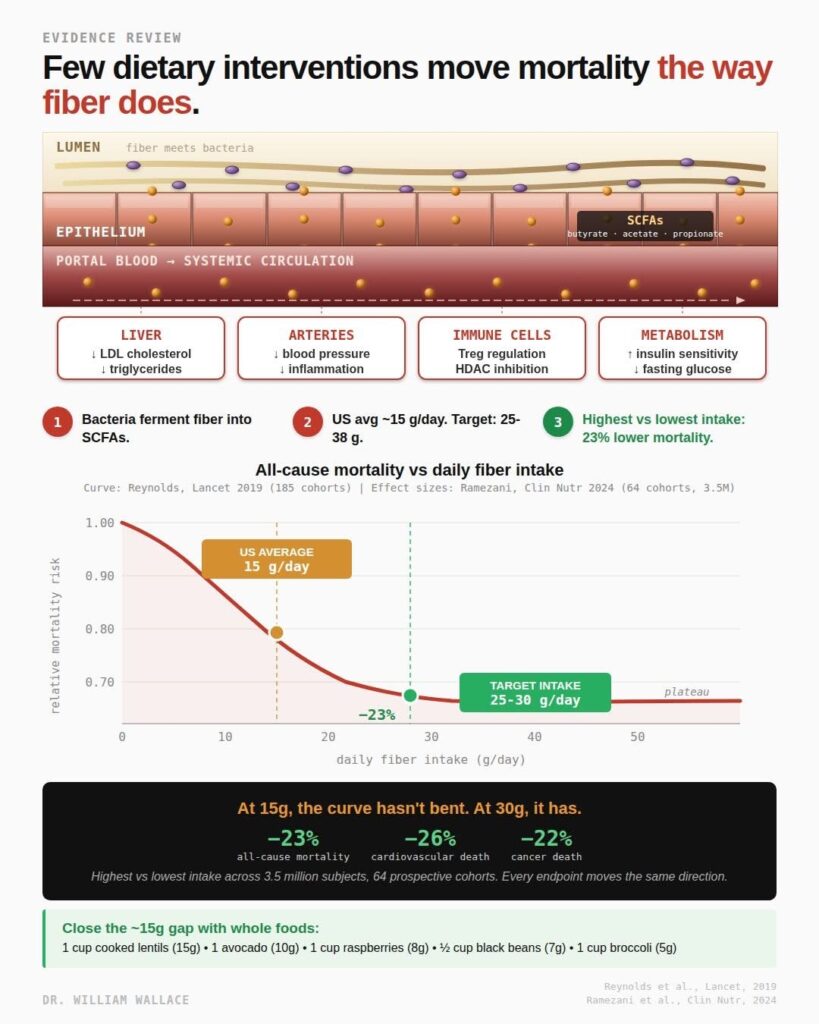
If you’re looking for one nutrition habit that gives a big payoff, eating more fiber is hard to beat. The research shown in the image makes a bold point: very few diet changes are linked to lower risk of death the way fiber is. In other words, people who eat more fiber tend to live longer and have lower risk of major diseases.
Let’s break down what that means, why fiber matters, and how to actually get more of it without overcomplicating your meals.
What is fiber (in normal-person language)?
Fiber is the part of plant foods your body can’t fully digest. Instead of being broken down like sugar or fat, it moves through your gut and does helpful things along the way.
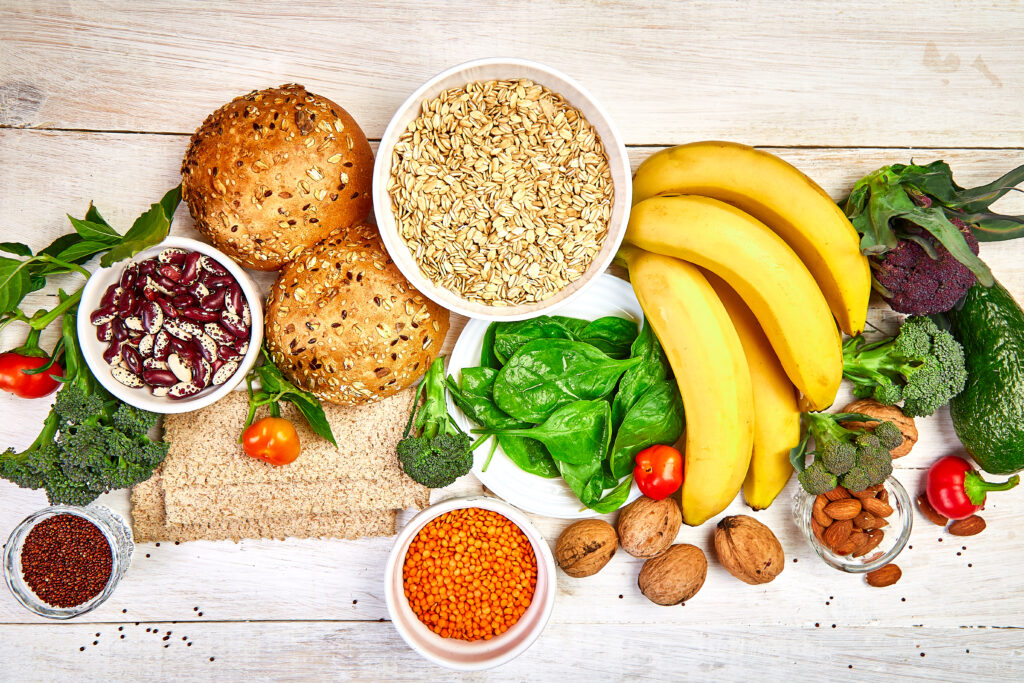
You’ll find fiber in foods like:
- Beans and lentils
- Fruits (especially berries)
- Vegetables (especially broccoli and leafy greens)
- Whole grains (oats, whole wheat, brown rice)
- Nuts and seeds
Why fiber is such a big deal
1) Fiber feeds your “good gut bacteria”
Inside your intestines you have trillions of bacteria (your gut microbiome). When you eat fiber, those bacteria “eat” it too.
When they break down fiber, they create helpful compounds called short-chain fatty acids (SCFAs)—the image lists examples like butyrate, acetate, and propionate. You don’t need to memorize those names. The simple takeaway is:
Fiber → gut bacteria use it → your body gets helpful byproducts.
2) Those byproducts support whole-body health
The image highlights several areas fiber may improve:
- Heart & blood vessels: better cholesterol and lower inflammation
- Blood sugar & metabolism: better insulin sensitivity and steadier blood sugar
- Immune function: supports immune balance and lowers chronic inflammation
The “fiber gap”: most people aren’t getting enough
According to the image:
- The average person in the U.S. eats about 15 grams of fiber per day
- A strong target is about 25–30 grams per day (some research suggests benefits up to ~38g)
That means many people have a daily gap of ~10–15 grams.
The big result: higher fiber intake is linked to lower mortality
The image shows a chart comparing fiber intake to “all-cause mortality” (risk of death from any cause). In plain terms, it suggests:
- At 15g/day, the benefits haven’t fully kicked in yet
- Around 25–30g/day, the curve drops (meaning lower risk) and then starts to level off
It also highlights a headline number: people with the highest fiber intake vs. the lowest had about a 23% lower risk of death overall.
(And it notes similar direction for deaths related to heart disease and cancer.)
Easy ways to add ~15 grams of fiber (without a complete diet overhaul)
The image gives a simple “whole foods” example to close the gap. Here are a few realistic options:
Add one of these per day:
- 1 cup lentils (big fiber boost)
- ½–1 cup black beans in a bowl, taco, or salad
- 1 avocado on toast or with eggs
- 1 cup raspberries with yogurt or oatmeal
- 1 cup broccoli with lunch or dinner
You don’t have to do all of them; just stacking one or two changes can get you close to the 25–30g target.
Important note: increase fiber slowly
If you jump from low fiber to high fiber overnight, you might feel:
- bloating
- gas
- stomach discomfort
A better approach:
- Add fiber gradually over 1–2 weeks
- Drink more water (fiber works best with fluid)
Bottom line
Fiber isn’t a trendy “hack”; it’s one of the most consistently supported nutrition habits for long-term health.
If you’re currently around 15g/day, aiming for 25–30g/day is a practical, research-backed goal. The simplest way to get there is to add more beans, lentils, berries, broccoli, and avocado… one meal at a time.